No category

What Causes Gutters to Pull Away From the House

What Causes Gutters to Pull Away From the House Many gutter problems stay unnoticed until the first strong rain. A small leak, loose hanger, clogged outlet, or incorrect slope can allow water to overflow or run behind the gutter long before the damage becomes obvious. A gutter system works best when every part supports the same goal: collect roof runoff quickly and move it away from vulnerable exterior surfaces and the foundation. A failure at one small point can affect the performance of an entire run. Common Causes Water can overflow even when the gutter looks clean if the outlet is restricted, the downspout is too small, the gutter has lost its slope, or a large roof valley directs more water to the area than the system can carry. Signs to Look For Loose or missing fasteners: Hangers and screws should keep the gutter securely aligned with the roof edge. Erosion below downspouts: Soil washout shows that discharged water may not be traveling far enough from the home. Standing water in the gutter: Water remaining after dry weather often means the run has lost its intended slope. Sagging sections: A low spot can hold standing water and may indicate loose hangers or weakened fascia. Stains on siding: Water marks below the roof edge can help identify where overflow or leakage is occurring. Water behind the gutter: Drips between the gutter and fascia can point to positioning, flashing, roof-edge, or fascia problems. One symptom does not always identify the exact cause. A complete inspection should follow the water path from the roof edge through the gutter, outlet, downspout, and final discharge location. Why Problems Develop Around The Gutter System Water can overflow even when the gutter looks clean if the outlet is restricted, the downspout is too small, the gutter has lost its slope, or a large roof valley directs more water to the area than the system can carry. A professional gutter project should consider more than linear footage. Roof valleys, long runs, two-story sections, corners, fascia condition, downspout quantity, outlet size, and the ground-level discharge path can all change the scope. What a Professional Gutter Service Should Address Confirm the water path. The contractor should determine where roof runoff enters the gutter and where the system ultimately discharges it. Verify downspout discharge. The finished system should move water away from the structure and avoid creating new drainage problems at ground level. Inspect the entire run. The visible leak may not be the only issue. The full gutter, outlet, downspout, fascia, and roof edge should be checked. Address fascia problems. New gutters should not be attached over severely deteriorated fascia without correcting the underlying wood condition. Restore sealed joints. Compatible gutter sealant is used where the system design requires sealed seams, corners, end caps, and outlets. Clear obstructions. Debris in the gutter, outlet, elbows, or downspout should be removed before judging the system's drainage. Not every job requires every step, but the finished system should collect water, move it toward the outlets, and discharge it without creating overflow or repeated moisture against the house. How to Reduce Future Gutter Problems Clean leaves, twigs, roofing granules, and other debris before it blocks outlets. Check gutters during rain from a safe location to see where water overflows or leaks. Inspect fascia below the gutter for stains, peeling paint, softness, or recurring dampness. Inspect gutter guards periodically because debris can still collect on or around them. Make sure downspout elbows and extensions remain connected and unobstructed. Check corners, seams, end caps, and outlets for fresh water marks. Regular maintenance cannot prevent every failure, but it makes leaks, clogs, loose sections, and drainage problems easier to catch before they cause larger exterior repairs. When to Call a Gutter Contractor If water repeatedly overflows, the gutter is sagging, sections are pulling away, fascia appears damaged, downspouts are not draining, or the same leak keeps returning, a professional inspection can help determine whether the issue is repairable or whether the system needs to be redesigned or replaced. Need Gutter Service? If you are not sure whether your gutter problem needs a small repair or a full replacement, City Gutters can evaluate the condition of the system and recommend an appropriate scope. Company: City GuttersServices: Gutter Installation, Replacement, Repair, Cleaning & Gutter GuardsArea: Sacramento Area

What Causes Gutters to Pull Away From the House Read More »
How to Tell If Your Gutters Are Failing

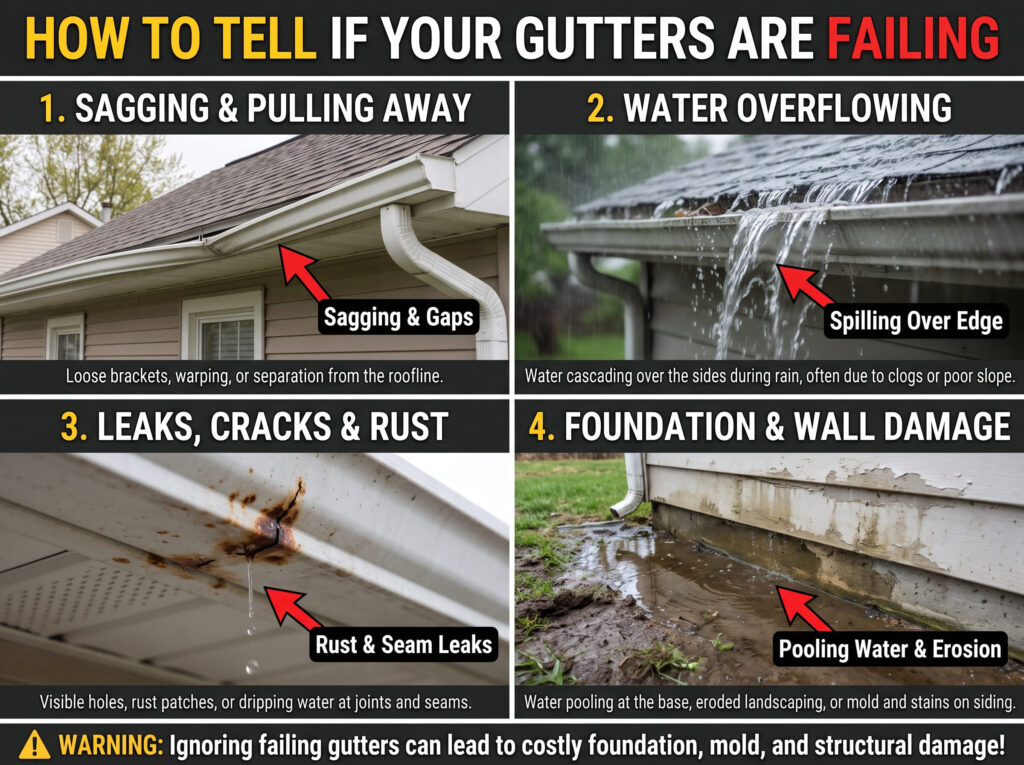
How to Tell If Your Gutters Are Failing A good gutter system is not only about the metal attached to the roof edge. Capacity, slope, downspout placement, fascia condition, roof geometry, and the final discharge point all affect how well the system handles rain. A gutter system works best when every part supports the same goal: collect roof runoff quickly and move it away from vulnerable exterior surfaces and the foundation. A failure at one small point can affect the performance of an entire run. Common Causes Leaks behind the gutter often point to a problem at the roof edge, drip-edge relationship, fasteners, fascia, or gutter position. Surface sealant alone may not solve the issue if water is entering from above or behind. Signs to Look For Debris at outlets: Leaves and roofing debris can collect at the exact point where water must enter the downspout. Sagging sections: A low spot can hold standing water and may indicate loose hangers or weakened fascia. Erosion below downspouts: Soil washout shows that discharged water may not be traveling far enough from the home. Standing water in the gutter: Water remaining after dry weather often means the run has lost its intended slope. Overflow during rain: Water spilling over the front edge can indicate debris, poor slope, restricted outlets, insufficient capacity, or too few downspouts. Water behind the gutter: Drips between the gutter and fascia can point to positioning, flashing, roof-edge, or fascia problems. One symptom does not always identify the exact cause. A complete inspection should follow the water path from the roof edge through the gutter, outlet, downspout, and final discharge location. Why Problems Develop Around The Gutter System Leaks behind the gutter often point to a problem at the roof edge, drip-edge relationship, fasteners, fascia, or gutter position. Surface sealant alone may not solve the issue if water is entering from above or behind. The best time to correct fascia problems is before new gutters are permanently installed. Attaching a new system to deteriorated wood can reduce holding strength and leave the moisture problem unresolved. What a Professional Gutter Service Should Address Confirm the water path. The contractor should determine where roof runoff enters the gutter and where the system ultimately discharges it. Verify downspout discharge. The finished system should move water away from the structure and avoid creating new drainage problems at ground level. Inspect the entire run. The visible leak may not be the only issue. The full gutter, outlet, downspout, fascia, and roof edge should be checked. Address fascia problems. New gutters should not be attached over severely deteriorated fascia without correcting the underlying wood condition. Restore sealed joints. Compatible gutter sealant is used where the system design requires sealed seams, corners, end caps, and outlets. Secure or replace failed components. Loose hangers, damaged outlets, leaking corners, end caps, or sections should be repaired or replaced as needed. Not every job requires every step, but the finished system should collect water, move it toward the outlets, and discharge it without creating overflow or repeated moisture against the house. How to Reduce Future Gutter Problems Watch for standing water after the rain stops because it can reveal a slope problem. Make sure downspout discharge is not eroding soil next to the foundation. Inspect fascia below the gutter for stains, peeling paint, softness, or recurring dampness. Trim branches that drop heavy debris directly onto the roof and gutter system. Inspect gutter guards periodically because debris can still collect on or around them. Schedule repairs before the wet season when you already know a gutter section is loose, leaking, or overflowing. Regular maintenance cannot prevent every failure, but it makes leaks, clogs, loose sections, and drainage problems easier to catch before they cause larger exterior repairs. When to Call a Gutter Contractor If water repeatedly overflows, the gutter is sagging, sections are pulling away, fascia appears damaged, downspouts are not draining, or the same leak keeps returning, a professional inspection can help determine whether the issue is repairable or whether the system needs to be redesigned or replaced. Need Gutter Service? For gutter service in the Sacramento area, contact City Gutters to discuss installation, replacement, repairs, cleaning, downspouts, or gutter guards. Company: City GuttersServices: Gutter Installation, Replacement, Repair, Cleaning & Gutter GuardsArea: Sacramento Area

How to Tell If Your Gutters Are Failing Read More »

10 Signs Your Gutters Need Attention

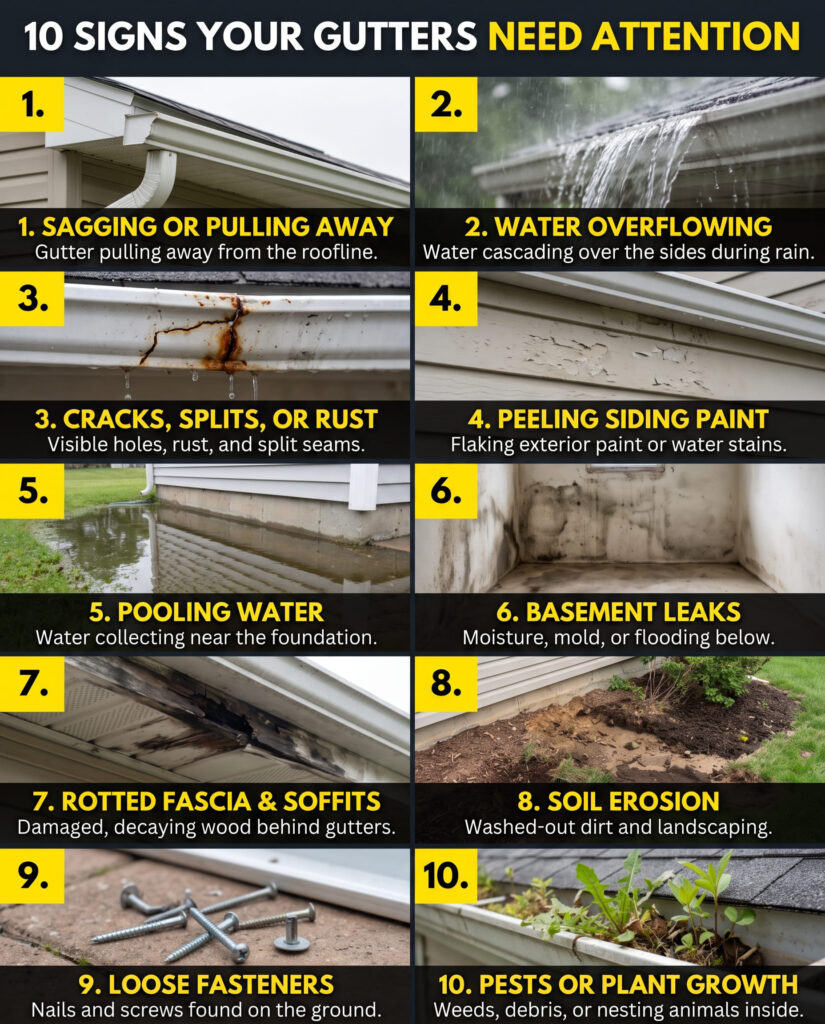
10 Signs Your Gutters Need Attention Many gutter problems stay unnoticed until the first strong rain. A small leak, loose hanger, clogged outlet, or incorrect slope can allow water to overflow or run behind the gutter long before the damage becomes obvious. A gutter system works best when every part supports the same goal: collect roof runoff quickly and move it away from vulnerable exterior surfaces and the foundation. A failure at one small point can affect the performance of an entire run. Common Causes Roof geometry changes the load on a gutter system. Long roof sections, steep pitches, and valleys can concentrate runoff into specific locations, which is why gutter size and downspout placement should match the actual roof. Signs to Look For Leaking corners or seams: Repeated dripping at joints can stain siding and keep nearby wood wet. Standing water in the gutter: Water remaining after dry weather often means the run has lost its intended slope. Stains on siding: Water marks below the roof edge can help identify where overflow or leakage is occurring. Debris at outlets: Leaves and roofing debris can collect at the exact point where water must enter the downspout. Peeling paint on fascia: Paint failure behind or below the gutter can be a sign of recurring moisture. Erosion below downspouts: Soil washout shows that discharged water may not be traveling far enough from the home. One symptom does not always identify the exact cause. A complete inspection should follow the water path from the roof edge through the gutter, outlet, downspout, and final discharge location. Why Problems Develop Around The Gutter System Roof geometry changes the load on a gutter system. Long roof sections, steep pitches, and valleys can concentrate runoff into specific locations, which is why gutter size and downspout placement should match the actual roof. When comparing estimates, homeowners should look at gutter size, material, downspout count, removal of old gutters, fascia-related exclusions, cleanup, warranty terms, and how the contractor plans to handle unusual roof areas. What a Professional Gutter Service Should Address Verify downspout discharge. The finished system should move water away from the structure and avoid creating new drainage problems at ground level. Secure or replace failed components. Loose hangers, damaged outlets, leaking corners, end caps, or sections should be repaired or replaced as needed. Correct alignment and slope. A properly pitched gutter should move water toward the intended outlet instead of leaving standing water. Restore sealed joints. Compatible gutter sealant is used where the system design requires sealed seams, corners, end caps, and outlets. Address fascia problems. New gutters should not be attached over severely deteriorated fascia without correcting the underlying wood condition. Inspect the entire run. The visible leak may not be the only issue. The full gutter, outlet, downspout, fascia, and roof edge should be checked. Not every job requires every step, but the finished system should collect water, move it toward the outlets, and discharge it without creating overflow or repeated moisture against the house. How to Reduce Future Gutter Problems Make sure downspout elbows and extensions remain connected and unobstructed. Watch for standing water after the rain stops because it can reveal a slope problem. Make sure downspout discharge is not eroding soil next to the foundation. Schedule repairs before the wet season when you already know a gutter section is loose, leaking, or overflowing. Check gutters during rain from a safe location to see where water overflows or leaks. Inspect gutter guards periodically because debris can still collect on or around them. Regular maintenance cannot prevent every failure, but it makes leaks, clogs, loose sections, and drainage problems easier to catch before they cause larger exterior repairs. When to Call a Gutter Contractor If water repeatedly overflows, the gutter is sagging, sections are pulling away, fascia appears damaged, downspouts are not draining, or the same leak keeps returning, a professional inspection can help determine whether the issue is repairable or whether the system needs to be redesigned or replaced. Need Gutter Service? If the first rain revealed leaks or overflow around your home, City Gutters can check the gutter layout, slope, outlets, downspouts, and visible fascia condition. Company: City GuttersServices: Gutter Installation, Replacement, Repair, Cleaning & Gutter GuardsArea: Sacramento Area

10 Signs Your Gutters Need Attention Read More »